Monday, September 28
1B.1 An Empirical Approach to Predict FICDM ESD Current Waveform and Product Robustness

Kuo-Hsuan Meng
Kuo-Hsuan Meng received his B.S. degree from the Department of Electronics Engineering and his M.S. degree from the Institute of Electronics, National Chiao Tung University, Hsinchu, Taiwan, in 2006 and 2007, respectively. He received his Ph.D. from the Department of Electrical and Computer Engineering at the University of Illinois Urbana-Champaign in 2015. He worked at NXP Semiconductors, Austin, TX, from 2015 to 2021. He has been with Silicon Laboratories, Austin, TX, since 2021. His research interests include ESD protection network design, I/O library architecture, and CAD/EDA development for SoC integration and ESD/latch-up design verification.
1B.2 Modeling of ESD Diodes in the CDM Time Domain
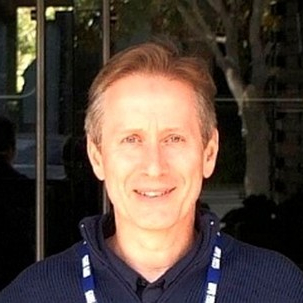
Michael Stockinger
Michael "Michi" Stockinger received his PhD in electrical engineering with highest honors from Vienna University, Austria, in 2000. His doctoral research focused on the optimization of ultra-low-power CMOS transistors. In 2000, he joined Motorola's semiconductor sector, which became Freescale Semiconductor in 2004 and NXP Semiconductors in 2016. Michael is currently a Technical Director with NXP's Analog Competence Center located in Austin, Texas, focusing on ESD protection and LU prevention for advanced CMOS products. His on-chip ESD solutions have been implemented in the Kinetis, i.MX, ColdFire, and MCX product lines. Michael was awarded several EOS/ESD Symposium awards: 2001 Best Paper, 2003 Best Paper & Best Presentation, 2013 Best Paper & Outstanding Paper, and 2020 Best Paper. He received the 2023 Industry Pioneer Recognition Award by the ESD Association. Michael has authored over 40 technical papers and holds 34 patents. He has served in the TPCs of several EOS/ESD Symposia, International Reliability and Physics Symposia, and International ESD Workshops, and has taught several ESDA tutorials and online courses. Michael is chair of the JEDEC JESD78 latch-up testing workgroup and Si2's CMC ASM-ESD diode model workgroup.
Interactive Seminar: Process Assessment - ESD Event Detection
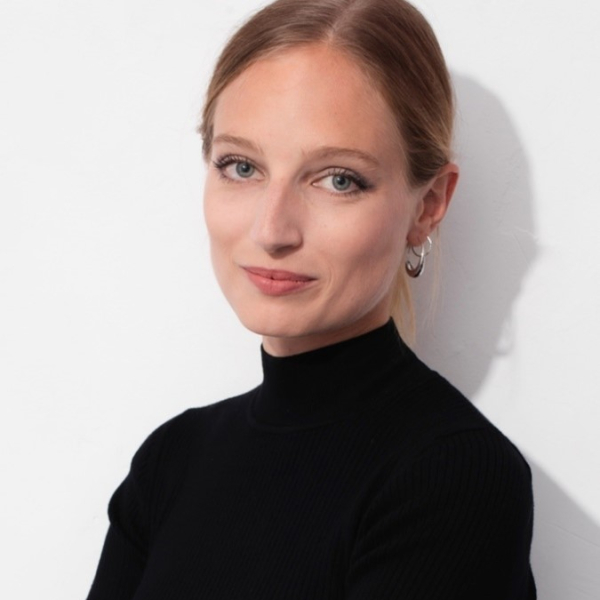
Lena Zeitlhoefler
Lena Zeitlhoefler received her Master's degree in Electrical Engineering in 2017 from the Technical University of Munich (TUM). During her time as a Ph.D. student at TUM, she worked in collaboration with Infineon Technologies AG in the fields of ESD and, in particular, on the physics of CDM and CDM simulation. She is an active member in several standardization working groups. In recent years, she was a member of the TPC for the EOSESD Symposium and for IEW Europe and Asia, and mentored several publications. She joined the global ESD team at Infineon in Munich, Germany, full-time in 2021.
Friedrich zur Nieden
Friedrich zur Nieden received the Ph.D. degree in electrical engineering from TU Dortmund University, Germany, in 2014. From 2007 to 2012, he was a research and teaching assistant at the On-Board Systems Laboratory at TU Dortmund University. In 2010, he received a scholarship from the German Academic Exchange Service, which allowed him to stay at the University of Missouri Science and Technology in Rolla, Missouri, USA, where he continued his work in system-level ESD simulation. In 2012, he joined the central ESD department at Infineon Technologies AG in Munich, Germany. At Infineon, he works on ESD topics, focusing on characterization, device testing, ESD at the system level, and production support.
M1.1 Antenna-Oscilloscope-Combinations for ESD Detection
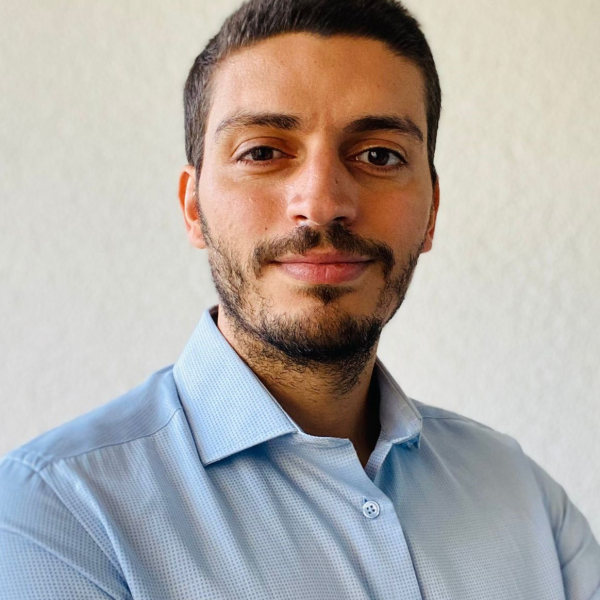
Mohamed Chefai
Mohamed Chefai received his Master's degree in Electrical Engineering from the Technical University of Munich (TUM) in 2022. After his studies, he joined the central ESD department of Infineon Technologies AG based in Munich, Germany. In his current position at Infineon, Mohamed works on ESD engineering with a strong focus on device testing.
M1.2 The Hazards of Plastic Bottles for Containment of Flammable Materials
David E. Swenson
David E. Swenson retired in 2003 after 35 years of service at 3M. While at 3M, he was responsible for new static control packaging material development and application, training 3M personnel worldwide, and providing application assistance to users of static control products globally, with particular emphasis on Asia Pacific and Japan. Dave and his wife, Geri, established a new company, Affinity Static Control Consulting, L.L.C., in 2003, and support clients around the world. Dave has been a member of the ESD Association since 1984 and has served in many capacities, including as the 1997 Symposium General Chair and as president of the Association in 1998 and 1999, and again in 2008 and 2009. He is currently appointed to the Board of Directors to assist with technical inquiries. Dave was presented with the ESD Association's highest award, the “Outstanding Contributions Award,” in 2002. He is an original member of the ESDA Standards Committee, serving on many Working Groups and the ANSI/ESD S20.20 Task Team. He is a member of the Electrostatic Society of America and IMAPS, and is a retired US Expert on IEC TC101, Electrostatics, after serving for more than 20 years.
M1.3 Risk Assessment of Processes with Printed Circuit Boards
Wolfgang Stadler
Wolfgang Stadler is a consultant specializing in electrostatic discharge (ESD) and electrical overstress (EOS), with 30 years of experience in both areas. He is the co-founder and co-owner of Gärtner & Stadler ESD Consulting GmbH & Co. KG. He actively participates in the EOS/ESD Association and IEC working groups focused on ESD control and process assessment. Wolfgang is co-chair of the ESDA business unit "Standardization". Wolfgang is appointed to the Board of Directors of the EOS/ESD Association. In 2019, he received the Outstanding Contribution Award from the EOS/ESD Association, and in 2021, the Joel P. Weidendorf Award for his significant contributions to the development of EOS/ESD standards. He is a member of the German National Committee DKE/K 185 and has served as Secretary of IEC TC101 since January 2026. Since 2015, he has been serving as president of the German ESD FORUM e.V.
Tuesday, September 29
M2.1 Evaluating Ionizer Efficiency Using a Discharge Current Sensor
Heinrich Wolf
Heinrich Wolf received his PhD from the Technical University of Berlin, Germany. In 1999, he joined the Munich branch of the Fraunhofer Institute for Reliability and Microintegration (IZM), which became the Fraunhofer Institute for Electronic Microsystems and Solid State Technologies EMFT. In his role as an expert in test and measurement, he became chief scientist at the EMFT and co-leads the Test of Electronic and Quantum Systems (TEQ) group. He also co-chairs the CDM Joint Working Group in the standardization body of the ESD Association, and represents the German ESD-Forum in the standards working groups.
M2.2 Humidity Dependence of Material Characteristics and Effects on ESD Control
Toni Viheriäkoski
Toni Viheriäkoski established electrostatics laboratory services for Nokia in 2001. He specializes in electrostatics and ESD risk analysis across healthcare, medical, electronics, automotive, and process industries through his company, Cascade Metrology. He has authored over 30 publications on electrostatics and ESD. Toni serves as Chair of the Finnish STAHA Association and the Standardization Committee SK101, and contributes to IEC TC101 and the EOS/ESD Association workgroups. He received the IEC 1906 Award in 2019, the EOS/ESD Association Outstanding Paper Award in 2022, the Best Paper Award as co-author in 2023, and an international fellow award in Electrostatics in 2025.
M2.3 A Distributed Active ESD Event Detector for In Line Low-Level ESD Monitoring

Chang-Jiun Lai
Chang-Jiun Lai received the B.S. degree from the Department of Electronics and Electrical Engineering, National Yang-Ming Chiao Tung University (NYCU), Hsinchu, Taiwan, in 2024, and the M.S. degree from the Institute of Electronics, National Yang Ming Chiao Tung University (NYCU), Hsinchu, Taiwan, in 2025. He is currently an engineer of mixed-signal analog circuit design with NVIDIA Corporation.
Manufacturing Hands-on: ESD Control Basics
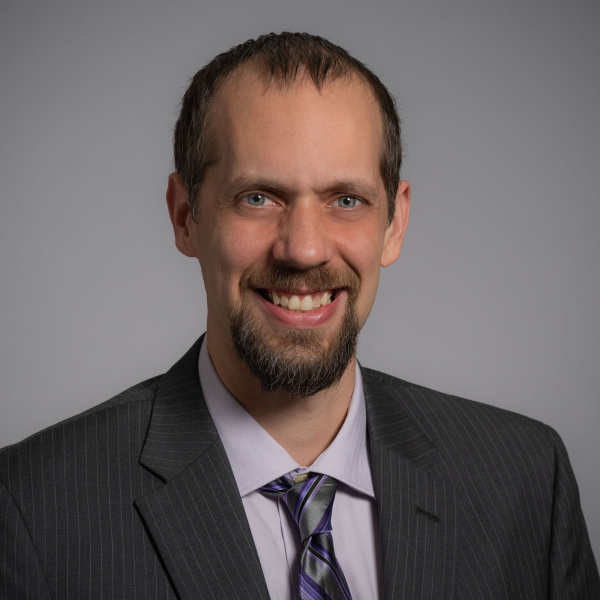
Devin Hart
Devin serves as the ESD Technical Lead and ESD SME at Honeywell FM&T. He is passionate about ensuring the workforce is properly trained to handle ESDS product. He created multiple e-learning and hands-on training courses focused on ESD, soldering processes, and electrical/mechanical assembly. Focusing on improving efficiency, he has built several software tools to help mistake-proof and automate tasks, such as the ESD preventative maintenance check process and database. Supporting high reliability product, Devin is developing several innovative solutions to mitigate ESD risk and mistake-proof ESD processes. He created a structured process and trained up a team to evaluate ESD non-conformances in the production environment. Devin enjoys being a member of several ESD Association working groups and task teams. He graduated from Missouri Western State University with a BS in Manufacturing Engineering Technology and an MAS in Engineering Technology Management. Outside of work, Devin enjoys wood working, traveling, being active in his church, and being a husband and a father.
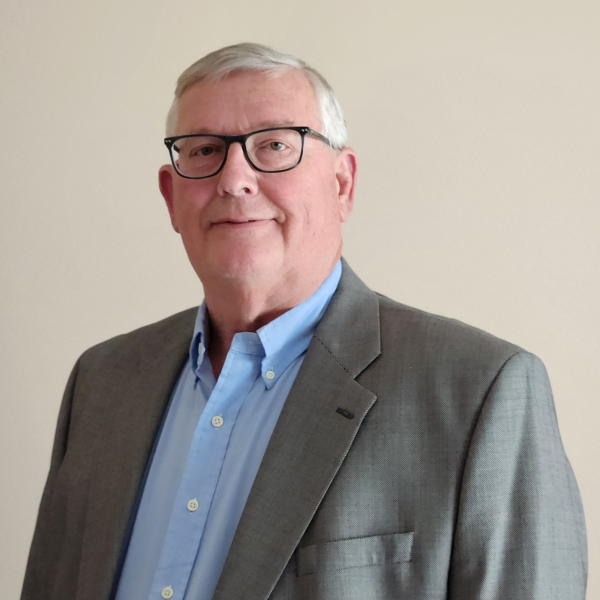
Dale Parkin
Dale Parkin was the ESD Coordinator for Seagate Technology Twin Cities Operations located in Shakopee, MN; where has been employed since 2007. In addition to Dale’s Site Responsibilities, he led the Seagate Corporate ESD Material Test Laboratory. Dale led ESD audits at suppliers, sub-contractors, OEM, and business partners. Dale co-author on a Patent while at Seagate on Dynamic Body Voltage Testing. Previously Dale was employed at IBM, Rochester, MN. for 33 years, where he worked as Corporate Standards Project Authority for Electrostatic Discharge Protection. Dale has authored and co-numerous technical disclosures and papers while at IBM related to ESD Control. He has also co-authored several papers that have been presented at previous EOS/ESD Symposiums. Dale has been a member of the ESDA since 1984 and is an iNARTE Certified ESD Engineer. As a member of the ESDA, he has served as in many different positions, including Vice President and on the Board of Directors. Currently participates in several Committees; Standards, Human Resources, Nominations and Manufacturing Symposium Steering. Dale has volunteered many times over in several other ESDA facets; Workshop Chairman and Panel Lead, Volunteer Recognition Chairman, AV Chairman, Symposium Advisor and monitored many tutorials. Dale is currently the Standards Working Group Chairman for WG4 - Worksurfaces, WG9 – Footwear and WG97 – Footwear/Flooring Systems. He participates as a member of WG1 – Wrist Straps, WG2 - Garments, WG3 - Ionization, WG7 – Flooring, WG11 - Packaging, WG15 – Gloves, WG17 – Process Assessment, WG19 – High Reliability ESD Control Processes, WG20.20 – ESD Control Program , Standards Committee, Working Group Chairs, Nominations, Awards. In 2007, Dale was awarded the David Barber Sr. Memorial Award for his contribution to the development, organization, management, and growth of the EOS/ESD Symposium. In 2012, Dale was awarded the ESDA President Award in recognition of significant contributions, leadership and management that has enhanced EOS/ESD Association, Inc. operations and effectiveness in serving industry and the organization. In 2015, Dale was received the Volunteer Merit Award. The Volunteer Merit Award is to recognize the dedication, exemplary effort, and/or outstanding participation of an EOS/ESD Association, Inc. volunteer in regard to the development and promulgation of our organization’s activities and committee work with the nominations coming from volunteer peers. In 2017, Dale was awarded the Outstanding Contribution Award. The Outstanding Contributions Award is EOS/ESD Association, Inc.’s most prestigious award. It is awarded to an individual who has made a significant impact in the field of EOS/ESD through technical achievement or has made major contributions to either the development or the operation of EOS/ESD Association, Inc. In 2018, Dale was awarded the Joel Weidendorf Memorial Standards Award. The Joel Weidendorf Memorial Standards Award is presented to an individual who has made a significant contribution to the development of EOS/ESD Association, Inc. standards. He is a member of the North Central ESD Chapter. He has served as Past President, Vice President and Program Chairman. He is currently a member of the Chapter’s Board of Directors and is presently the Chapter’s National ESDA Delegate.
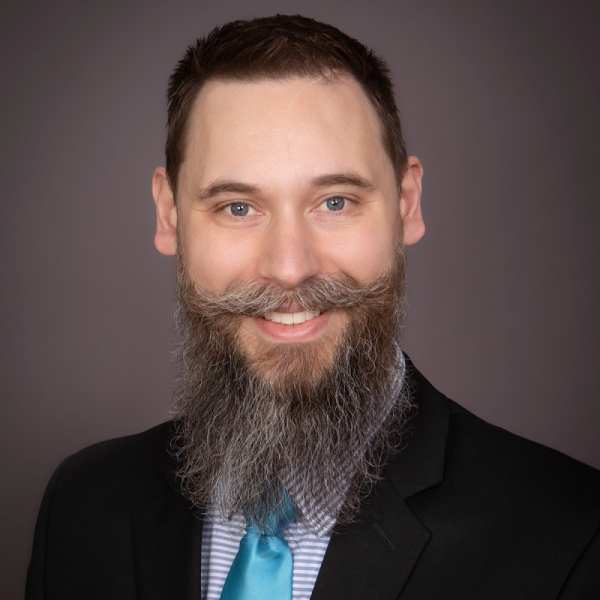
Victor Skulavik II
Wolfgang Stadler
Wolfgang Stadler is a consultant specializing in electrostatic discharge (ESD) and electrical overstress (EOS), with 30 years of experience in both areas. He is the co-founder and co-owner of Gärtner & Stadler ESD Consulting GmbH & Co. KG. He actively participates in the EOS/ESD Association and IEC working groups focused on ESD control and process assessment. Wolfgang is co-chair of the ESDA business unit "Standardization". Wolfgang is appointed to the Board of Directors of the EOS/ESD Association. In 2019, he received the Outstanding Contribution Award from the EOS/ESD Association, and in 2021, the Joel P. Weidendorf Award for his significant contributions to the development of EOS/ESD standards. He is a member of the German National Committee DKE/K 185 and has served as Secretary of IEC TC101 since January 2026. Since 2015, he has been serving as president of the German ESD FORUM e.V.
Lena Zeitlhoefler
Lena Zeitlhoefler received her Master's degree in Electrical Engineering in 2017 from the Technical University of Munich (TUM). During her time as a Ph.D. student at TUM, she worked in collaboration with Infineon Technologies AG in the fields of ESD and, in particular, on the physics of CDM and CDM simulation. She is an active member in several standardization working groups. In recent years, she was a member of the TPC for the EOSESD Symposium and for IEW Europe and Asia, and mentored several publications. She joined the global ESD team at Infineon in Munich, Germany, full-time in 2021.
Wednesday, September 30
6B.3 CC-TLP Round Robin Testing: Analysis and Results
Friedrich zur Nieden
Friedrich zur Nieden received the Ph.D. degree in electrical engineering from TU Dortmund University, Germany, in 2014. From 2007 to 2012, he was a research and teaching assistant at the On-Board Systems Laboratory at TU Dortmund University. In 2010, he received a scholarship from the German Academic Exchange Service, which allowed him to stay at the University of Missouri Science and Technology in Rolla, Missouri, USA, where he continued his work in system-level ESD simulation. In 2012, he joined the central ESD department at Infineon Technologies AG in Munich, Germany. At Infineon, he works on ESD topics, focusing on characterization, device testing, ESD at the system level, and production support.
6B.2 A Strategy for Alternative CDM Testing
Lena Zeitlhoefler
Lena Zeitlhoefler received her Master's degree in Electrical Engineering in 2017 from the Technical University of Munich (TUM). During her time as a Ph.D. student at TUM, she worked in collaboration with Infineon Technologies AG in the fields of ESD and, in particular, on the physics of CDM and CDM simulation. She is an active member in several standardization working groups. In recent years, she was a member of the TPC for the EOSESD Symposium and for IEW Europe and Asia, and mentored several publications. She joined the global ESD team at Infineon in Munich, Germany, full-time in 2021.
6B.1 Statistical Process Characterization for ESD Design
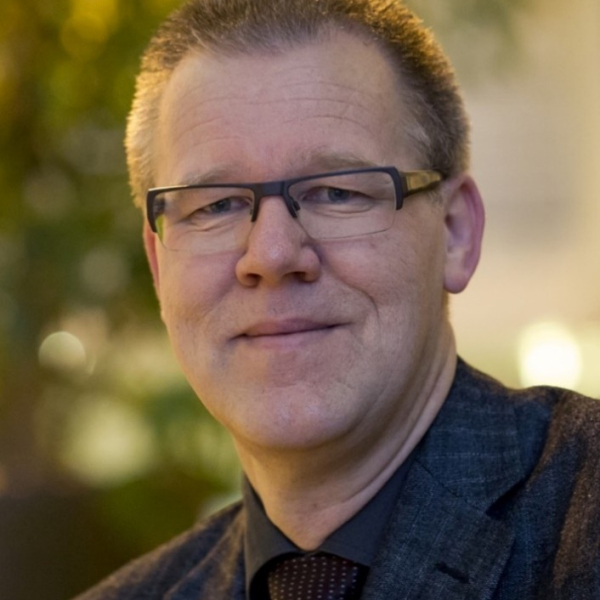
Theo Smedes
After receiving his Ph.D. from the Eindhoven University of Technology with a thesis on compact device modeling, Theo Smedes worked at the Delft University of Technology on layout-to-circuit extraction. In 1995, he joined NXP Semiconductors (then Philips Semiconductors), working on tools for statistical design. Currently, he is an NXP Fellow for ESD and Latch-up. Theo is a member of all ESDA device testing working groups and chairs the TLP working group. He published several papers on ESD and received the 2007 Best Paper Award and the 2009, 2018, and 2022 Outstanding Paper Award of the EOS/ESD Symposium. Theo was the general chair of the EOS/ESD Symposium in 2013. He has been recognized with ESDA's David F. Barber Sr. Memorial Award (2017) and Outstanding Contribution Award (2022).
Invited Presentation: CubeSats Require ESD Qualification and Handling Protocols for Launch and Space Survivability
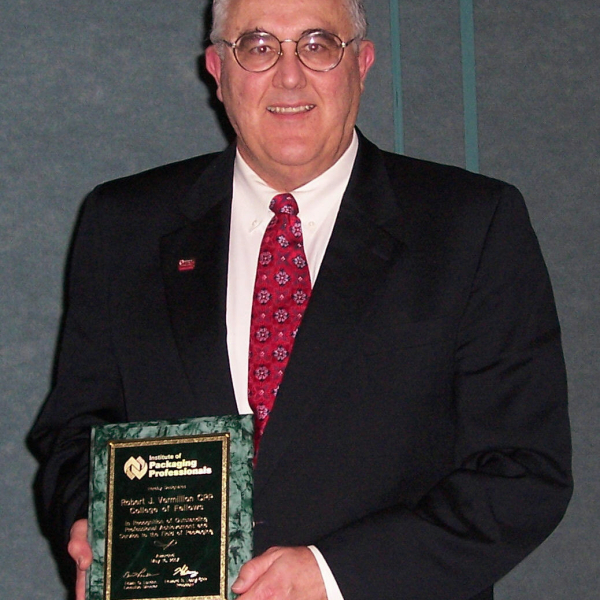
Bob Vermillion
Bob Vermillion, an ESDA Standards member since 1996, is internationally recognized for peer reviewed publications of ESD/EMI materials and packaging qualification and solutions for protection of Space & Defense flight hardware. In 2018, Bob developed the iNARTE® Space & Defense ESD Engineer/Technician program for packaging, handling, storage and transport of ultra-sensitive EEE components in collaboration with Exemplar Global, 3rd party certification body and ASQ family member.
A NASA Industry partner. Bob was named ESD Technical Authority for the Agency in 2018. Vermillion, CPP, Fellow, is a Certified ESD & Product Safety Engineer-iNARTE® and Triboelectrification SME for Space, Lunar and Mars surfaces.